
Overgrown Limbs Brought Back Into Line
Tree trimming in Indianola for limbs crowding roofs, fences, and utility lines on older residential lots
Older houses in Indianola often sit on compact lots where shade trees planted decades ago have grown into positions that were never anticipated—limbs brushing across shingles, canopy pressing against fence lines, and branches extending toward utility wires. Blacks Family Tree Services trims trees across Indianola and the surrounding towns for homeowners dealing with exactly those conditions. The visible result after the work is done is straightforward: cleared clearance above rooflines, limbs pulled back from fencing, and a canopy that no longer overlaps the structures below it.
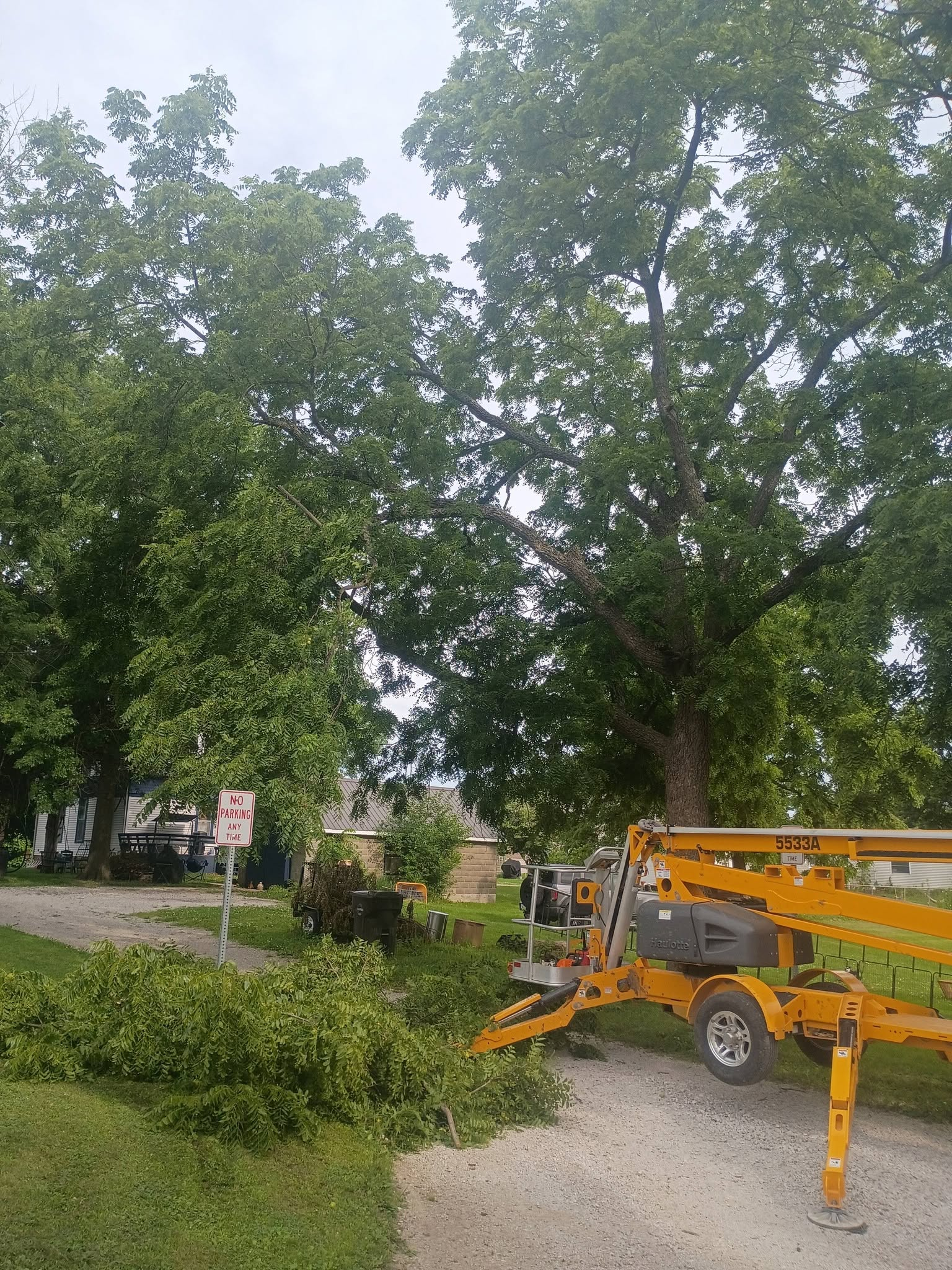
Where the site and the canopy height allow, Blacks Family Tree Services uses a lift instead of a ladder or climbing setup, which means more of the work happens from a stable platform rather than a rope-and-harness position. That matters for precision—a lift lets the trimmer position exactly where the cut needs to happen and make clean cuts at the correct point on a limb rather than reaching from an awkward angle. Every job includes hauling the brush off the property when the trimming is finished, so the yard is clear when the crew leaves.
Request a look at the trees on your property to identify which limbs need to come back and what the work will involve.
What You Notice Once the Trimming Is Finished
A trimmed tree is visibly different from one that has been left to grow unchecked for several seasons. Limbs that were rubbing shingles no longer make contact during wind, which eliminates the wear pattern that scraping branches leave on a roof surface over time. Canopy that had closed over a fence line is pulled back, which means the fence stays dry faster after rain and gets actual air circulation rather than staying damp under a continuous leaf cover. For small lots in Indianola's older neighborhoods where trees and structures are in close quarters, those are practical differences, not cosmetic ones.
Before-and-after photos of completed trimming work from Blacks Family Tree Services are available on request, along with referrals from past customers. Those materials show actual finished work on comparable properties rather than stock images, which gives homeowners a realistic picture of what trimming accomplishes on lots similar to their own.
The approach used also matters for the tree's structure going forward. Removing limbs at the correct point—rather than cutting at an arbitrary distance from the trunk—allows the tree to seal over the wound properly. A trim that leaves stubs tends to produce clusters of weak regrowth at the cut point, which means the same problem returns faster and is harder to manage on the next cycle.
Answers About How the Work Is Done
Homeowners on older Indianola lots with mature trees close to structures tend to have questions about what the trimming process actually involves. The answers below address the practical details of how the work gets done.
What determines whether a lift is used or a climber goes up instead?
The canopy height, proximity to the structure, and the ground conditions at the base of the tree all factor into that decision—where a lift can position cleanly and reach the right elevation, it is the preferred option because it provides a stable working platform for making precise cuts.
How does trimming differ from simply cutting a limb back as far as possible?
Proper trimming removes a limb back to its point of origin at the branch collar rather than leaving a stub, which allows the tree's natural sealing process to work correctly and reduces the likelihood of decay entering the wound.
Why do tight back-lot trees in older Indianola neighborhoods often need more careful positioning than trees in open yards?
Houses built on smaller historic lots were platted with less side-yard clearance, which means a tree that was planted near a property line decades ago may now sit within a few feet of a fence, a structure, or a neighbor's lot—leaving little room to maneuver equipment without planning the access carefully.
What happens to the brush and cut material once trimming is complete?
All brush from each job is hauled off the property, so there is no pile of limbs and leaf debris left for the homeowner to manage after the crew finishes.
How can a homeowner tell whether a trimming job was done correctly once the crew has left?
Look at the cut points on limbs that were removed—clean cuts made at the branch collar, without protruding stubs or torn bark along the limb, indicate cuts made at the right location and with appropriate technique.
Blacks Family Tree Services also trims trees in Norwalk, Creston, Winterset, Osceola, and Chariton. To set up an on-site assessment of your trees, call Blacks Family Tree Services at (641) 572-2268.