
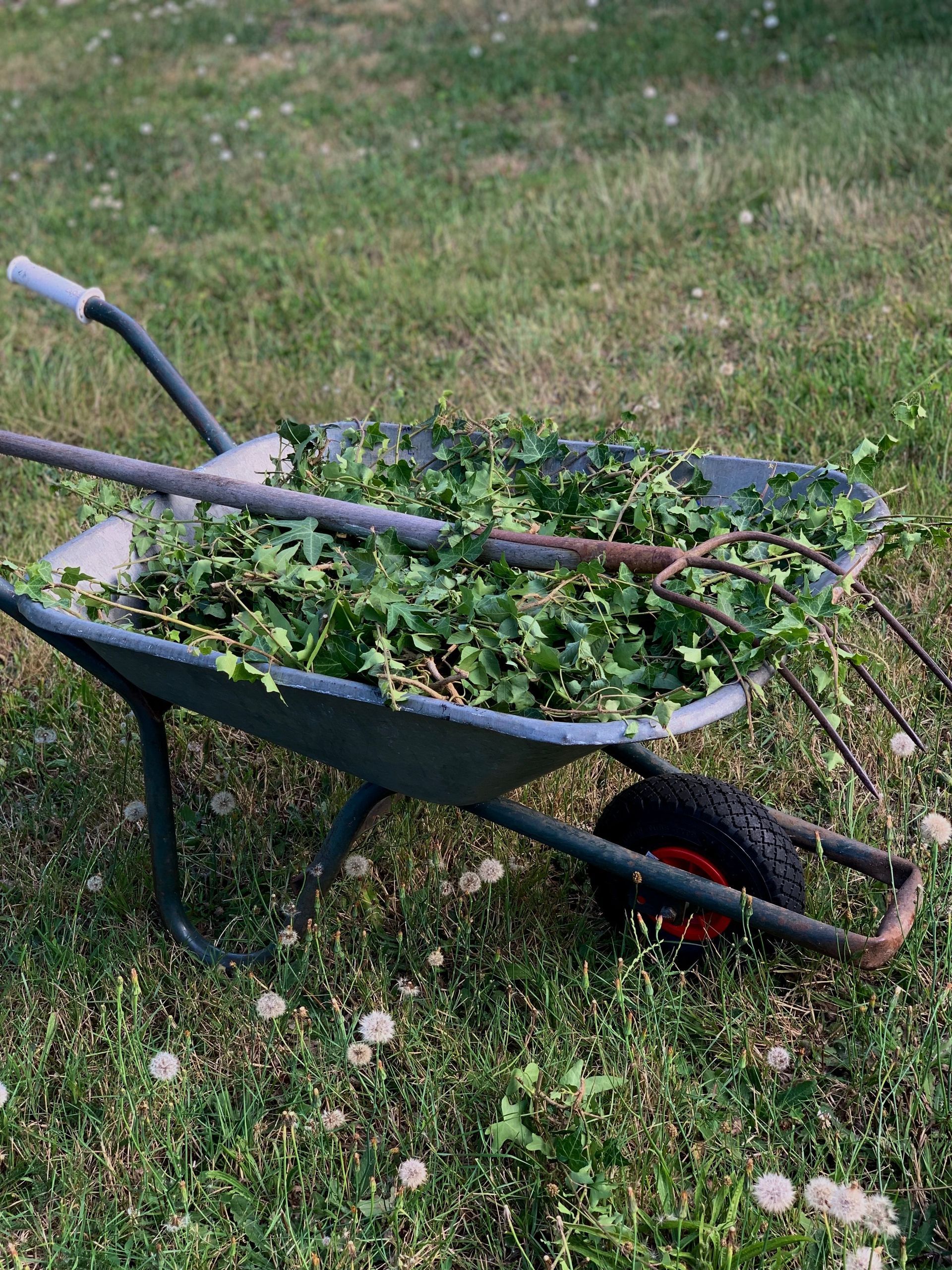
Overgrown Shrubs Taking Over the Yard
Bush Removal and Brush Hauling in Indianola for overgrown foundation shrubs, back-fence brush, and decades of unchecked yard growth
Shrubs planted against a foundation thirty or forty years ago were often chosen without much thought about how large they would eventually grow, and on older lots in Indianola and Leon, those plantings have frequently outgrown the space by a wide margin. What started as a low hedge along a front walkway is now six feet tall and pressing against siding, or a row of shrubs along the back fence has thickened into a wall of brush that blocks access and shades out anything planted near it. Blacks Family Tree Services removes overgrown bushes and hauls away the resulting debris in Indianola and nearby towns, leaving the lot clear and usable again.
Each removal starts with cutting the shrub at the base and working through the root system where practical, then loading everything onto the truck. The job is not finished until the debris it created is off the property, which is a built-in part of every brush removal, not a separate line item you have to ask about. At the estimate stage, it is worth asking directly whether the price covers stump and root removal or only the above-ground material, because that distinction affects how cleanly the area can be replanted or graded afterward.
Set up an estimate to walk the yard and identify which shrubs are candidates for removal versus those that can be cut back to a workable size.
What Bush Removal Actually Accomplishes
Removing an overgrown shrub from a foundation planting involves more than cutting it down. Mature shrubs develop dense root crowns that stay fixed in the soil after the stems are cut, and if that crown is left in place, it will either resprout vigorously or simply block the area for future planting. Where root removal is practical given soil access and proximity to the foundation, those roots are pulled or cut out to open the ground. Where a shrub is tight against a foundation wall, the approach shifts to cutting the stems as low as possible and treating the remaining crown to discourage resprouting.
Once the brush is removed and hauled away, the area opens up in ways that are immediately visible: foundation walls become accessible for inspection or painting, back-fence lines open up, and light reaches areas that were shaded for years. Blacks Family Tree Services has referrals from past customers who can speak to the condition of the finished yard and what the process looked like on lots similar to yours.
Tight back yards present a logistics consideration worth thinking through before the job starts. If there is no side gate or the gate is too narrow for equipment, brush has to be carried out by hand rather than driven out, which affects how the work is sequenced. Flagging that constraint at the estimate means the right approach is planned from the start rather than discovered on the day of the job.
Questions Before Starting Your Project
The following questions cover the specifics of bush removal and brush hauling, with particular attention to the mature, foundation-planted shrubs and overgrown back-lot conditions common on older residential properties in Indianola.
How is a shrub removed from a tight space near a foundation without damaging the siding or the foundation itself?
The stems are cut first to reduce the profile, then the root crown is worked out using hand tools rather than mechanical pulling when the shrub is within a foot or two of the wall. This keeps force directed downward and outward rather than against the structure.
What is the difference between removing a shrub and cutting it back?
Removal takes the root crown out of the ground so the plant cannot resprout. Cutting back reduces the size but leaves the root system intact, which means the shrub will regrow. If the goal is to reclaim the area for replanting or paving, removal is the appropriate scope.
How does root depth vary between common foundation shrubs and what does that affect?
Shallow-rooted species like spirea and forsythia typically have a dense but compact crown that can be extracted with a digging bar and hand tools. Deep-rooted shrubs like lilac or viburnum develop a more extensive system that may require cutting below grade and leaving part of the root to decay.
Why do older lots in Indianola tend to have more severe overgrowth along foundations?
Properties built before the 1970s were often landscaped with fast-growing shrubs that were fashionable at the time and that have now had four or five decades to expand unchecked. Without active pruning to manage their size, many of those plantings have grown to three or four times their intended footprint.
What does the area look like after the brush is hauled away?
The ground is clear down to soil level, the fence or foundation it was covering becomes visible, and any underlying conditions, such as drainage issues, cracked foundation sections, or fence damage, can be seen and addressed without the brush in the way.
Blacks Family Tree Services also removes bushes and hauls brush in Norwalk, Creston, Winterset, Osceola, and Chariton. To get a clear picture of what your yard's removal will involve, call (641) 572-2268 and arrange a walk-through estimate.