
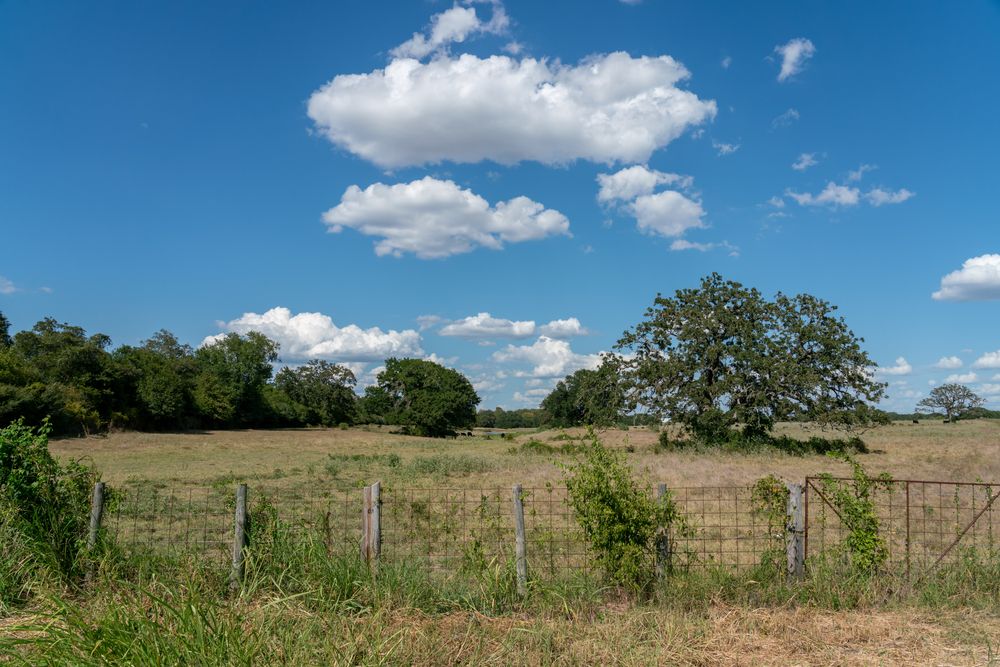
Fence Lines Buried in Brush and Volunteer Trees
Fence Line Clearing in Leon for overgrown tree lines, wrapped wire, and encroached posts on rural and farm-edge properties
On farm-edge and rural acreage lots around Leon and Decatur County, fence lines that have not been actively maintained for a decade or more tend to accumulate the same way: volunteer trees root along the wire, brush fills in beneath them, and what was once a clear boundary becomes a tangled line that has physically wrapped around posts and fence wire alike. Blacks Family Tree Services clears those fence lines in Decatur County and across south-central Iowa, removing the growth that is pulling the fence out of alignment and making the line functional again without tearing out the fence itself.
The clearing sequence depends on what is growing and how far in it has gone. Brush and smaller trees are cut back to the fence line directly. Larger trees that have rooted along the wire are taken down from the top in sections where the structure of the fence or adjacent property makes a straight fell impractical. Once the cutting is done, the material is loaded and hauled off the property, so the line is clear rather than covered in slash that will re-root in the same spots next season.
Arrange a site visit to walk the fence line and get a clear picture of what the clearing will involve before any work begins.
What Proper Fence Line Clearing Requires
Clearing a fence line that has grown up over many years is not the same as routine brush mowing. Trees that have grown through or around wire have to be cut in a sequence that releases the wire rather than snapping it or pulling down posts. Where a volunteer tree has grown large enough to bear weight on the fence itself, removing it improperly can bring a section of fence down with it. Cuts are planned to free the wire and posts before the stem is dropped, which keeps the existing fence structure intact through the clearing process.
When the line is cleared, the fence posts and wire become visible and accessible for the first time in years, which lets you see exactly what condition the fence is in and where repairs are needed. Blacks Family Tree Services documents completed jobs with photos, so you can see the before-and-after condition of a similar fence line before committing to the scope of work.
The scope of fence line clearing covers the trees and brush but does not include fence repair or post resetting. If the clearing reveals significant damage to the wire or posts, that work would follow under a separate scope. Knowing that boundary up front means the estimate reflects what is actually included and what will need to be addressed by a fencing contractor afterward.
Common Questions About the Work
The questions below address how fence line clearing is performed on the kinds of established rural and farm-edge properties common in Decatur County, where vegetation encroachment has often been building for years.
How do you remove a tree that has grown through a fence without pulling the fence apart?
The stem is cut above the wire first to remove the weight and canopy, then the base is cut free from the ground side in a way that releases the wire rather than dragging it. Where the tree has grown tightly around a post, that section may require cutting the stem flush and leaving the root collar to decay in place.
What happens to the brush and cut material after the fence line is cleared?
All cut material is hauled off the property as part of the job. Leaving slash piled along a cleared fence line is not an option because re-rooting along the same corridor is common with many species of volunteer brush and scrub trees found in this region.
Why do volunteer trees establish so readily along fence lines on older acreage?
Wire fences provide a physical anchor point, and the soil disturbance along a fence perimeter tends to favor opportunistic species. On older acreage around Leon and Lamoni, fence lines that were installed in open pasture have since accumulated decades of seed deposition from adjacent timber and hedgerow.
How is the clearing approach different for a wire fence versus a wooden post fence?
Wire fences require more attention to tension release since a mature tree bearing against a wire span can store significant load. Wooden post fences are more rigid, and the concern shifts to making sure the drop zone for each cut section is clear of the post line itself.
What should be done after clearing to slow regrowth along the fence?
Cutting brush at the base removes what is visible but does not address root systems. On properties where regrowth has been persistent, follow-on treatment of cut stumps or periodic maintenance cutting is the practical way to keep the line clear over time.
Blacks Family Tree Services also clears fence lines in Norwalk, Creston, Winterset, Osceola, and Chariton. To schedule a walk of your fence line and get a straightforward assessment of the scope, call (641) 572-2268.