
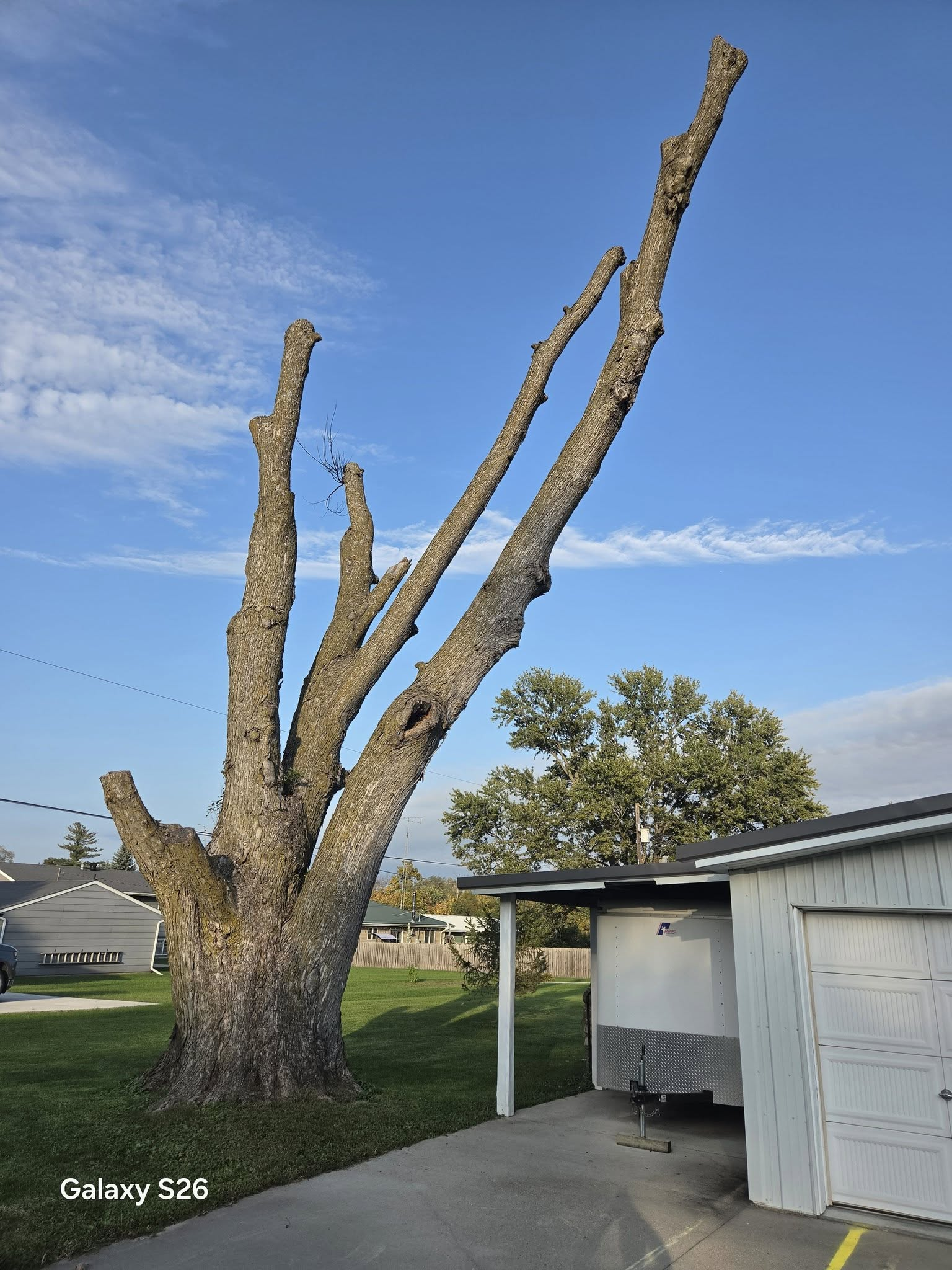
Storm Damage Calls Answered Around the Clock
Emergency Tree Service in Indianola for fallen limbs and trees resting on roofs, driveways, and structures after a storm
A large limb resting on a roof or a full tree across a driveway is not a situation that can wait for a scheduled appointment. Blacks Family Tree Services takes emergency tree calls in Indianola and nearby towns 24 hours a day, seven days a week, with the owner handling the work directly rather than dispatching a crew unfamiliar with the job. That distinction matters when the safe sequence of cuts depends on reading exactly what is bearing weight on what, and getting that read wrong causes more damage than the storm did.
Older neighborhoods in Indianola have mature trees whose canopy spread often reaches over rooflines and detached garages, which means a failure point high in the crown can put a heavy load on the structure below. The assessment step comes first: what part of the tree is on the structure, where the weight is distributed, and whether the tree can be cut from the ground or requires a climb to work safely from above. Once that picture is clear, the tree is cut in sections from the top down, with each piece directed away from the roof or wall before it is released. Debris is hauled off the property before the job is closed.
Call (641) 572-2268 to describe what is on the structure so an accurate read on the approach can happen before arrival.
Why the Sequence of Cuts Determines the Outcome
Emergency removals are different from standard removals because the tree is already in an unstable position. Cutting from the wrong point first can release tension that was holding other branches in place, causing secondary drops onto the structure. The correct sequence identifies the load path first, removes the pieces that are bearing weight last, and controls the direction of each cut so the structure underneath is not struck again. That is the core of what makes emergency work different from scheduled removal, and it is why an honest assessment of what can be saved versus what must come out is part of every call.
After the tree is off the structure and the debris is cleared, you will be able to see the roof or siding clearly for the first time since the damage occurred. Blacks Family Tree Services gives a plain account of what the tree did and what the damage looks like once the wood is removed, which gives you accurate information to pass along to an insurance adjuster or a roofing contractor.
Not every tree involved in storm damage has to be fully removed. A tree that lost one major limb may be stable and healthy enough to leave standing with crown work to balance it. The assessment will distinguish between trees that are structurally compromised at the base or trunk and those that simply shed a branch under load, so the scope of the job reflects what the situation actually requires.
Answers About How Emergency Work Gets Done
These questions address the specific process involved in emergency tree removal, particularly for the mature, close-planted trees common on older residential properties in Indianola and surrounding towns.
What happens first when a tree is resting on a roof or structure?
The load path is assessed before any cut is made, meaning the climber or ground crew identifies where the weight is sitting, what is holding it, and what sequence of cuts will move the tree without shifting that load onto the structure again.
How is a tree cut in sections when ground access is limited?
When the base cannot be reached safely, the climber ascends from a clear point and works down through the canopy, cutting and rigging each section to land in a controlled drop zone rather than on the structure below.
When is climbing necessary versus cutting from the ground?
Ground cutting works when the tree is freestanding and there is a clear fall direction. When a tree or limb is already resting on a roof or power line, climbing is needed to access the upper sections first and control the removal from above.
What does honest assessment mean for what stays and what comes out?
In Indianola's older neighborhoods, many large trees have multiple stems or co-dominant trunks, and storm damage to one stem does not always mean the whole tree has to go. The assessment looks at root condition, trunk integrity, and crown balance to determine whether the remaining tree is structurally sound.
How is debris handled after an emergency removal?
Cut material, brush, and limbs are loaded and removed from the property as part of the emergency job, leaving the driveway, roof access, and yard clear rather than stacked with debris for a later pickup.
Blacks Family Tree Services also handles emergency tree calls in Norwalk, Creston, Winterset, Osceola, and Chariton. For an active emergency, call (641) 572-2268 and describe the situation so arrival can be prioritized based on what is on the structure.